
From Truck-Based Wagons Built By The Army To Sleek Modern EVs: Here’s A History Of Chinese Station Wagons
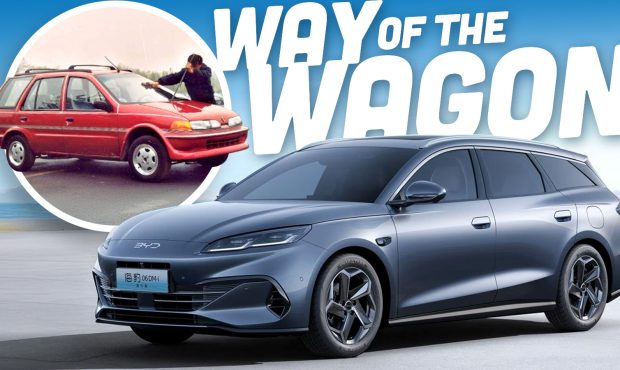
[ad_1] Today, we take a look at Chinese station wagons. The country has a surprisingly long station wagon tradition going back the the 1980s. Now, with the NEV revolution, many Chinese brands are launching new lifestyle-focused wagons. The general term for a station wagon in China is 旅行车, luxíng chē. It literally means “travel car.”
[ad_1]
Today, we take a look at Chinese station wagons. The country has a surprisingly long station wagon tradition going back the the 1980s. Now, with the NEV revolution, many Chinese brands are launching new lifestyle-focused wagons. The general term for a station wagon in China is 旅行车, luxíng chē. It literally means “travel car.” Here’s a look at their history, and at some extremely cool modern wagns.
The Shanghai-Based Wagons
Today, SAIC is best known for its SAIC-GM joint venture, but in the late 1980s, its brand Shanghai manufactured a series of sedans, and several third-party specialty carmakers created pickup trucks and wagons based on these sedans. Most of these companies were also based in the Shanghai area. In China, then and today, full company names often start with the city or province where the business is based. This is a leftover from the old state-controlled economy.


Shanghai Anting Bus Works SA5020XGA

Shanghai Anting Bus Works was a bus maker. In the late 1980s and early 1990s, the company also manufactured Shanghai-based wagons. Anting Bus Works designated the SA5020XGA as a six-seat car; note the bench in the rear compartment. The car also has a single fog light under the bumper and a lot of shiny chrome. The motor was the standard Shanghai SH682Q, a 2.4-liter straight-six with an output of 85 hp for an 82 mph top speed.

The company also made a police version, fitted with police lights and painted in a pretty blue-white color scheme.
Shanghai Shenlian Special Purpose Vehicle SQL5020

Another specialty carmaker based in Shanghai, Shanghai Shenlian Special Purpose Vehicle, produced pickup trucks and wagons based on the Shanghai sedans. The SQL5020 was a five-seat wagon. The engine was a newer variant of the SH682Q unit, with 100 hp. Oddly, Shanghai Shenlian claims a lower top speed: 77 mph.

The Dalian Classic Car Museum in Dalian, Liaoning Province, displayed this light blue 1993 example.

Sadly, the museum was closed after a lengthy court case involving some alleged violence with the owner, and the cars were sold off.
Kunshan Xindong Auto Refit Works SQL1027

Kunshan Xindong Auto Refit Works was a Shenlian subsidiary based in Jiangsu Province. It made commercial vehicles based on the Shenlian wagons, like the SQL1027 panel van. The red characters are mirrored. It says: 厢式货车, Xiāng shì huòchē, van. The gray interior nicely matches the gray body!

Another car made by Kunshan Xindong appears to have a large box in the cargo area.
The wild wagons of the late 1990s
The late 1990s was the first golden age for Chinese station wagons. More than 100 Chinese carmakers, large and small, developed zillions of wagons. Most were based on 4×4 or pickup truck chassis. Some of the designs were inspired by Japanese wagons, mainly Toyota and Nissan, others by Audi, and some had original designs.
Bamin BM6480

Bamin was a brand based in Fujian Province, born out of the People’s Liberation Army (PLA) 9506 Factory.
In the 1990s, China’s armed forces were even more decentralized than today, and zillions of army departments started their own capitalist companies, moving into everything from fisheries to bars & restaurants to real estate. And cars. Most of the army-related carmakers were born out of army-truck repair shops. The PLA 9506 Factory was one of those.
Bamin BM6481

The good soldiers created a line of 4x4s, SUVs, a few sedans, and two wagons. For the design, Bamin was inspired by the W123 Mercedes-Benz wagon. An interesting choice, as production of the W123 had ended in 1986. Bamin made two variants: the BM6480 base model and the high-end BM6481. Power came from a Toyota-derived 3Y 2.0-liter four-pot with 80 hp.
If you’re wondering why they’re sitting so tall, I’ll quote my own site CarNewsChina:
The vehicles are standing high on their wheels and that is because they are based on… the very same BJ212 chassis! Bamin made two variants: a pickup truck and a wagon. The vehicle on the first and this pic might look like sedans but they are in fact pickup trucks, made to look like the W123 Mercedes-Benz sedan.
Beijing Zhonglian WL5010XSD

Beijing Zhonglian was a brand owned by the Beijing Zhonglian Special Purpose Vehicle Factory. The WL5010XSD was a compact wagon with a surprisingly comprehensive design. The engine was a Geely-derived JL462 3-cylinder gasoline unit with 26 hp, good for a 57 mph top speed.
Beijing Yinyan CJY6450F

Beijing Yinyan was a Chinese car maker based in Beijing. The CJY6450F had the best wheel design of the 1990s wagons. Shiny, complex, with the brand name in red characters in the middle.
The rest of the design seems inspired by Japan, albeit with Chinese characteristics, like the tiny mirrors and door handles, the high ground clearance, and the dark-white color scheme. Power came from the 492QC-2 engine with an 83.8 hp output and a 68 mph top speed.
Dadi BDG6481

Dadi was probably the maddest Chinese carmaker of the 1990s. Dadi made all sorts of wacky machines. It was again a PLA business, founded by the PLA No. 9065 Refitting Company and based in Baoding, Hebei Province. The BDG6481 was a classy wagon based on a BAW BJ212 “Jeep” chassis, classed up with a high roof, lots of chrome, and a Chrysler grille.

The 468Q four-cylinder petrol engine was manufactured by Harbin Dongan Engine Corporation (DAAE), one of China’s largest state-owned engine makers. The output was 85 hp for a 75 mph top speed. It has a five-speed manual gearbox and rear-wheel drive. The steel wheels with the Dadi logo are really nice.
Dadi BDG6450 experimental vehicle

The Dadi BDG6450 was an experimental vehicle used for a high-speed test on a racetrack. There was no mass production. It was a wagon-notchback with a high roof and partially covered steel wheels, painted in brown & beige! It has Dadi stickers on the front doors and a chrome strip around the rear-side window.
Great Wall CC6470

People best know the Great Wall brand for its pickup trucks. But in its early days, Great Wall developed a series of sedans and wagons, largely inspired by Toyota design, most notably by the Crown S130 Royal Saloon (1991-1999) series. The CC6470 is quite large, with a rounded front and chromed door handles. The CC6470 had a 2.2-liter GW491QE gasoline unit under the hood with an output of 105 hp.

For some, the standard CC6470 wasn’t long enough, so Great Wall created a long-wheelbase version. The extension is at the B-pillar, just like on a stretched limousine. It also has off-road tires, a hood ornament, and super shiny wheels.
Hebei Bus Works HB6460

Hebei Bus Works was a busmaker based in Hebei Province. Besides buses, the company also made SUVs and wagons. The HB6460 was a pretty wagon, especially in red. Note the comically small mirrors! It has white military license plates, so Hebei Bus Works likely had a PLA connection too. The HB6460 had a BAW 2.2-liter 492QC-2 engine with 84 hp. The top speed was 70 mph.
Henan Xinye Automobile Modification Factory XYG 5030XBG

Not all Chinese wagon-makers were inspired by Japanese design! The Henan Xinye Automobile Modification Factory was more into Audi, and created a rough-looking wagon with steel wheels and a typical Audi nose. The company even added the Audi logo. The company had nothing to do whatsoever with Audi. The XYG 5030XBG was based on a BJ121 chassis. The 491Q four-cylinder engine produced 91 hp for an 87 mph top speed.
Liebao CFA6490

Liebao was a brand owned by the PLA 7319 Factory, another army-related business based in Hunan Province. The PLA 7319 Factory manufactured several pickup trucks, SUVs, and wagons. The Liebao CFA6490 was by far the coolest. It was a high-ground-clearance machine with massive wheels, extra side indicators, and an Audi-style grille, albeit without an Audi logo. Power: the 492Q four-pot with 84 hp for a 68 mph top speed. It was a big machine at 190 inches long. The Liebao brand stayed alive for a long time. It became part of Changfeng, went through a JV with Mitsubishi, became part of GAC, and was finally killed off in 2020.
Liming YQC6460

Liming was a brand owned by Yizheng Automobile Factory. Liming produced a series of SUVs and wagons. The Liming YQC6460 was a compact wagon with cool steel wheels and a shiny grille. It has tiny reflectors on the bumper. Power: a 2.4-liter BN-492QA gasoline engine with 83 hp, manufactured by Beinei Corporation, a well-known Chinese engine maker. Size: 187/71/69, 108.
Liming YQC6460NL

The YQC6460NL was a larger wagon, with a Toyota Crown Royal Saloon-influenced design. The company behind Liming also owned a local chain of hotels, so here’s the Liming in front of the Liming hotel, with a big fountain and all that more. Mt friend Sam once saw an abandoned Liming YQC6460NL in the wild. Power came from a Toyota-derived 4Y 2.2-liter four-cylinder gasoline engine with 68 kW/177 Nm. It had a 74 mph top speed.
Jie’an KQ6470Y

Jie’an was a brand owned by Kunming Automobile Factory, a car maker based in Kunming, the City of Eternal Spring, and capital of Yunnan Province. The brand sold several 4x4s and SUVs. The Jia’an KQ6470Y was a flashy wagon with rounded lines, a black grille, mud flaps, and steel wheels. Every wagon should have mud flaps! Under the red hood was a Benei BN492QA2L engine with, again, 84 hp. The top speed was a modest 62 mph.
The Audi 100-based Hongqi wagons
In the late 1980s until the late 1990s, the Audi 100/200 was made in China by the FAW-Volkswagen joint venture. Under the terms of the deal, FAW could use the Audi as a base to develop vehicles for its Hongqi brand. FAW used that opportunity to create an endless series of sedans, stretched limousines, open-top parade cars, and wagons. These wagons were unrelated to Audi’s 100/200 wagon, which was not manufactured in China.
Hongqi CA5020 XYC

The CA5020 XYC was the base wagon model. It looked almost too normal! Note the Hongqi ‘Red Flag’ hood ornament and the Winged 1 FAW logo at the grille. The Audi-based Honqi sedans and wagons were available with FAW, Volkswagen, and Nissan-sourced engines. The wagons had a 100 hp 2.2-liter FAW 488 engine, which was a rebadged Chrysler K-series unit.
Hongqi CA5020 XJH

Now we are talking! The CA5020 XJH was an extended-limousine wagon with sporty five-spoke alloy wheels. The extension is at the B-pillar, with an in-built window. It seated max 8 people.
Hongqi CA1021 U3
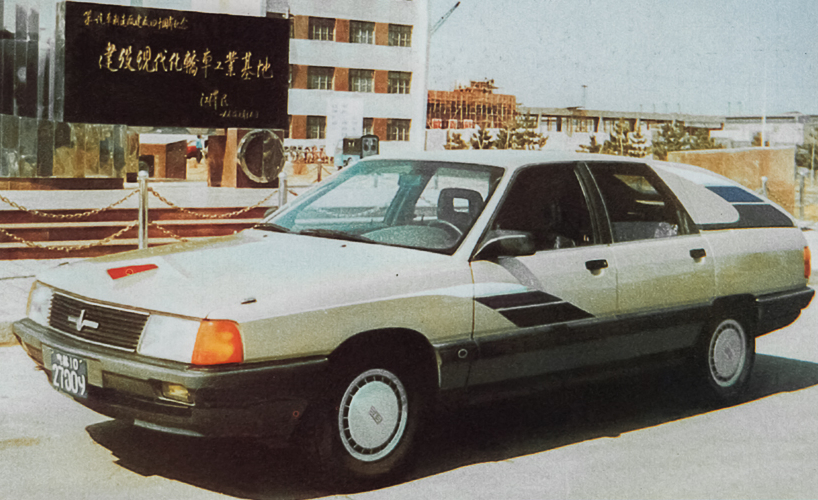
The CA1021 U3 was an early sports wagon, complete will wild stripes. Sadly, it was just a one-off concept.
Zhonghua CHB6401

Zhonghua was a Beijing-based brand that existed in the late 1990s. The visionary founder, Tang Jinsheng, wanted to reduce manufacturing costs by using a plastic body. The Zhonghua CHB6401 was a small wagon based on the chassis of a Xiali, powered by a 0.8-liter 3-cylinder engine. My friend Erik visited the factory in 1996, and he saw this pretty red example with stripes and sporty wheels.

The Zhonghua CHB6401 had a unique “feature.” The wagon didn’t have a tailgate. This was highly unusual, even in China, where weirdness wasn’t uncommon. The plastic production process simply wasn’t advanced enough to allow for a tailgate, with hinges and reinforcement and all of that. The only way to access the cargo area was via the second town. Not too handy, but hey, it looked great.
Jiuma JM2805CWXⅡ

Jiuma was a brand owned by the Shanghai Jinma Automobile Corporation. Originally, the company manufactured farming equipment. But like so many companies, it wanted a slice of the booming passenger car market. It therefore developed an interesting series of sedans, pickup trucks, and wagons. Shanghai Jinma did not have a license to produce cars, only for low-speed farming vehicles.
To get around this, Jinma fitted its Jiuma cars with a 2.2-liter diesel engine with, according to the company’s official specifications, 42 hp. Hence, it wasn’t able to go quicker than 70 km/h, which fell within the low-speed farming vehicle limits. Problem solved. Like so many things in China, it was kind of legal, and that was good enough. The design of the JM2805CWXⅡ was inspired by the Volkswagen Santana Variant.
Jiuma JM2805CWX-1

It gets a little weirder. After a while, Shanghai Jinma got bored with the Santana design and went for Volvo. The JM2805CWX-1 got a new nose with the Volvo diagonal on the grille, new wheels, and a new design for the rear-side window. Shanghai Jinma used a Volvo-style light blue color. The car on the left is the JM2805LX, a smaller wagon/hatchback with an electric powertrain.
The the 2000s & 2010s
In the 2000s and 2010s, the wild wagon boom ended. Automakers began building smaller wagons, often based on hatchbacks rather than pickup trucks or 4x4s. But not all was lost—some Chinese car makers introduced interesting solutions and novel ideas.
Dongfeng EQ6400PL Baolai Xideng

The Dongfeng EQ 6400PL Baolai Xideng was a small wagon made by a joint venture between Dongfeng Motor Corporation (DFM) and the Zhuhai Bull High Performance Composite Material Corporation. Like the Zhonghua, the body was made of plastic. The engine was a TJ376QE 1.0-liter four-pot, manufactured by Tianjin Internal Combustion Engine Corporation and based on a Toyota design. The top speed was 68 mph.
Geely Pride wagon

The Geely Pride wagon was based on a small hatchback, with an added side window. It was 153 inches long. Some may say it is still a hatchback, but Geely called it a wagon, and so will I. Third-side window: check. C-pillar: check. Tailgate: check. It’s a wagon alright. Production started in 2002, and it was proudly displayed at Geely’s outside booth at the 2004 Beijing Auto Show. It had a 1.3 with 86 hp under the hood.
Geely Pride SRV

The Pride SRV was a fancy variant of the Pride, painted in lime-green and fitted with a factory-standard roof rack with SRV branding. The engine was unchanged.

On the right is my Leyuan electric scooter. This was in December 2015. It was very cold, so my scooter is fitted with a leg-covering blanket and warm handlebar gloves. I also put extra reflective tape on it for the dark winter nights. It had a top speed of 35 mph and a range of 37 miles.
BYD Flyer F4 concept

BYD’s first car was the Flyer, which it got by buying another car maker. BYD wanted to expand the Flyer range, and in 2004, it unveiled a bunch of Flyer-based concept cars. One of those was the Flyer F4, a small wagon. At the time, SAIC-GM was selling the Buick Sail wagon, which was quite popular, so Chinese brands wanted in on the small-wagon thing. The F4 had a cool two-tone paint job and a raised roof with an integrated spoiler.
Brilliance BS4 Junjie Wagon

Brilliance was a brand owned by the Brilliance Auto Group. This company was best known for its Jinbei-branded minivans. The Brilliance brand was founded in 2000. At the time, it was hip to hire foreign designers, and it didn’t really matter who. The first Brilliance sedan, the BS6 Zhunchi, was designed by Giugiaro. The second sedan, the BS4 Junjie, was penned by Pininfarina. All fine, all happy.

The BS4 Junjie sedan arrived in 2006, and the wagon in 2009. The wagon was quite a looker, the design worked better on the wagon than on the sedan. It was the first relatively modern Chinese station wagon, and it earned Brilliance a lot of publicity. Fuzziily, the wagon was called Wagon even in Chinese: 骏捷Wagon, Junjie wagon.

The luggage space was 42.3 cubic feet and 60 cubic feet with the rear seats folded down. Brilliance offered three engines: a 136 hp 1.8, a 170 hp 1.8 turbo, and a 129 hp 2.0. The 1.8 turbo was by far the most popular engine for the BS4. Brilliance coupled the engine to a 6-speed manual or a 5-speed automatic. Size: 185/71/57, 110.
Brilliance BS4 Junjie Wagon – Update

In 2011, Brilliance updated the BS4 Junjie wagon. It got crossy looks, like a Volvo XC70 Cross Country, with bigger bumpers, wide wheel arches, side bars, and roof rails. Production of the entire BS4 Junjie series ended in 2012, so the updated version of the wagon is very rare.
The Wild Wagon Days Are Back Now With NEVs
With the New Energy Vehicle (NEV) revolution, the wild wagon days are back again. The competition is murderous, so brands launch all sorts of different models. At the same time, many middle-class Chinese consumers have more free time to spend on holidays and weekends. That led to the segment of boxy-lifestyle SUVs, in-car glamping, and a new generation of lifestyle station wagons. In China, these wagons are often called 猎装车, lièzhuāng chē, and that means “shooting brake.”
NIO ET5T

NIO was the first new Chinese brand to launch a station wagon. The NIO ET5T, aka ET5 Touring, is a sporty wagon based on the ET5 fastback sedan. It is a great looker, with an unusually short rear overhang for a wagon. The ET5T outsells the ET5 every month, proving the popularity of wagons in China.

The ET5T is quite small, with a length of 188 inches and a 114-inch wheelbase. The cargo space is 16 cubic feet. Power: AWD, 490 hp and 700 ft-lbs. It has a swappable battery pack with either 75 or 100 kWh. It costs 298.000 yuan or $41K.

Wagon = lifestyle = glamping = hip folks in beige. NIO sells camping accessories under the NIO Life Outdoor brand, like a side tent, camping lights, and camping furniture sets. The ET5T has a V2L connector to ower external appliances like a coffee maker or a speaker.

A NIO Life Outdoor branded foldable camping chair for 199 yuan ($27). But what about her brown hat? That’s a nice hat. So lifestyle. I want that hat!!!
BYD Seal 06 DM-i wagon

BYD sells around 30 models in China now, up from 21 in May 2024. The BYD Seal 06 DM-i wagon is based on the Seal 06 DM-i sedan. “DM-i” stands for Dual Motor intelligent”, that is BYD-speak for a PHEV. BYD coined the term in the early 2000s when the company started making PHEVs. The idea was that a PHEV powertrain had two motors: an ICE and an electric motor, hence: “Dual Motor”. The ‘i’ was added later; it stands for “Intelligent”.

The Seal 06 works well as a wagon; it looks sporty, with an integrated spoiler in the boot lid. The PHEV power train combines a 101 hp 1.5 with a 163 hp E-CVT, a 17-gallon fuel tank, and a 10.08 kWh or a 15.87 kWh battery pack. BYD hasn’t launched the wagon yet. Prices for the sedan start at 99.800 yuan ($13.8K). The wagon will likely cost a little bit more.
Neta S Shooting Brake

Neta is, or was, a cool Chinese EV-maker, founded in 2014. Neta sells, or sold, a lineup of attractive mid-market NEVs, including the brilliantly cool GT sports car. I am speaking half in the past because it seems Neta is going down, after disappointing sales and an expensive export drive that didn’t generate sales either. Although the company has suspended production, dealers still offer new Neta vehicles—likely with a steep discount

The Neta S Shooting Brake is based on the Neta S sedan. The wagon is available with EV and EREV power trains. EV RWD: 272 hp. EV AWD: 503 hp. EREV RWD: 95 hp 1.5 range extender + a 272 hp electric motor. It has a 593-liter luggage space, or 1295 liters with the seats down. The official price range is 159.900 to 209.900 yuan ($22-29K). Like the NIO, the S Shooting Brake targets the lifestyle glamping crowd. However, where NIO stops at a side tent, NETA offers a proper roof tent. With a ladder!
Zeekr 007 GT

Zeekr makes mid-high-end NEVs. The Geely Group owns the brand. Geely has positioned Zeekr just above Volvo, another Geely-owned brand. Volvo was once famous for its big station wagons, also see above, at Jiuma. Volvo was once known for its large station wagons (see Jiuma above). But Zeekr makes the wagons now. The Zeekr 007 GT is probably the prettiest modern Chinese lifestyle wagon. It is based on the Zeekr 007 sedan, which is rather pretty too.

What a behind! With a roof spoiler, another spoiler above the light bar, upside-down shark fins at the D-pillar, and black roof rails on each side of the sunroof.
Final words
So, here we are. After a slow start in the late 1980s, China’s first station wagon boom happened in the 1990s. The 2000s and 2010s were a little bit slower, with lots of smaller station wagons with some unexpected features. Finally, in the 2020s, a second station wagon boom is underway, helped by NEV platforms and the new breed of young consumers that is living the wagon lifestyle. There are more wagons underway, many more, so stay tuned for an update.
[ad_2]
منبع:theautopian
برچسب ها :
ناموجود- نظرات ارسال شده توسط شما، پس از تایید توسط مدیران سایت منتشر خواهد شد.
- نظراتی که حاوی تهمت یا افترا باشد منتشر نخواهد شد.
- نظراتی که به غیر از زبان فارسی یا غیر مرتبط با خبر باشد منتشر نخواهد شد.
ارسال نظر شما
مجموع نظرات : 0 در انتظار بررسی : 0 انتشار یافته : 0